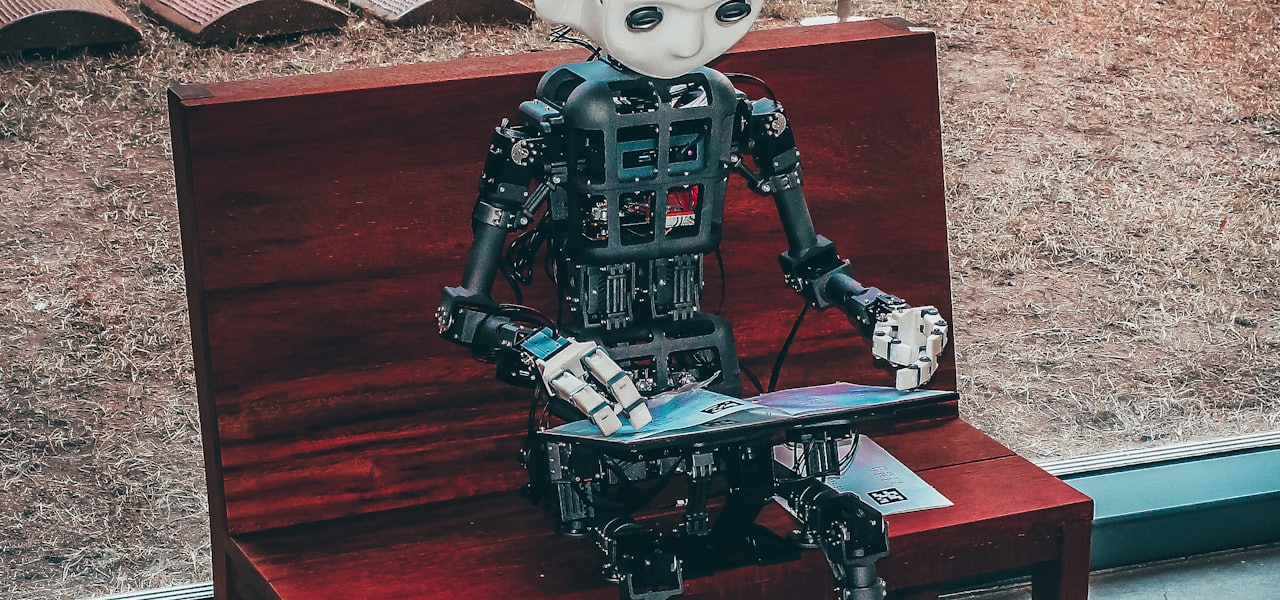
Social television is the union of television and social media. Millions of people now share their TV experience with other viewers on social media such as Twitter and Facebook using smartphones and tablets. TV networks and rights holders are increasingly sharing video clips on social platforms to monetise engagement and drive tune-in. The social TV market covers the technologies that support communication and social interaction around TV as well as companies that study television-related social behavior and measure social media activities tied to specific TV broadcasts – many of which have attracted significant investment from established media and technology companies. The market is also seeing numerous tie-ups between broadcasters and social networking players such as Twitter and Facebook. The market is expected to be worth $256bn by 2017. Social TV was named one of the 10 most important emerging technologies by the MIT Technology Review on Social TV in 2010. And in 2011, David Rowan, the editor of Wired magazine, named Social TV at number three of six in his peek into 2011 and what tech trends to expect to get traction. Ynon Kreiz, CEO of the Endemol Group told the audience at the Digital Life Design (DLD) conference in January 2011: "Everyone says that social television will be big. I think it's not going to be big—it's going to be huge". Much of the investment in the earlier years of social TV went into standalone social TV apps. The industry believed these apps would provide an appealing and complimentary consumer experience which could then be monetized with ads. These apps featured TV listings, check-ins, stickers and synchronised second-screen content but struggled to attract users away from Twitter and Facebook. Most of these companies have since gone out of business or been acquired amid a wave of consolidation and the market has instead focused on the activities of the social media channels themselves – such as Twitter Amplify, Facebook Suggested Videos and Snapchat Discover – and the technologies that support them. == Twitter == Twitter and Facebook are both helping users connect around media, which can provoke strong debate and engagement. Both social platforms want to be the 'digital watercooler' and host conversation around TV because the engagement and data about what media people consume can then be used to generate advertising revenue. As an open platform, conversation on Twitter is closely aligned with real-time events. In May 2013, it launched Twitter Amplify – an advertising product for media and consumer brands. With Amplify, Twitter runs video highlights from major live broadcasts, with advertisers' names and messages playing before the clip. By February 2014, all four major U.S. TV networks had signed up to the Amplify program, bringing a variety of premium TV content onto the social platform in the form of in-tweet real-time video clips. In June 2014, Twitter acquired its Twitter Amplify partner in the U.S. SnappyTV, a company that was helping broadcasters and rights holders to share video content both organically across social and via Twitter's Amplify program. Twitter continues to rely on Grabyo, which has also struck numerous deals with some of the largest broadcasters and rights holders in Europe and North America to share video content across Facebook and Twitter. == Facebook == Facebook made significant changes to its platform in 2014 including updates to its algorithm to enhance how it serves video in users' feeds. It also launched video autoplay to get users to watch the videos in their feeds. It rapidly surpassed Twitter and by the end of 2014 it was enjoying three billion video views a day on its platform and had announced a partnership with the NFL, one of Twitter's most active Twitter Amplify partners. In April 2015, at its F8 Developer Conference, it revealed it was working with Grabyo among other technology partners to bring video onto its platform. Then in July it announced it would be launching Facebook Suggested Videos, bringing related videos and ads to anyone that clicks on a video – a move that not only competed with Twitter's commercial video offering but also put it in direct competition with YouTube. == TV Time == TV Time is a television dedicated social network that allows users to keep track of the television series they watch, as well as films. It also allows them to express their reaction to the media they have seen with episode specific voting for favorite characters and emotional reaction to episodes, as well as commenting in episode restrictive pages. This way users are able to avoid spoilers while also finding a precise audience and community for each of their interactions, as opposed to bigger, non-television dedicated social medias such as Facebook and Twitter where the likelihood of unintentionally reading spoilers is much higher. TV Time offers an analytics service called "TVLytics" where the votes and reactions collected from users can be studied for research and television production purposes. == Advertising == According to Businessinsider.com, there are variety of applications for social TV, including support for TV ad sales, optimizing TV ad buys, making ad buys more efficient, as a complement to audience measurement, and eventually, audience forecasting and real-time optimization. Social TV data can ease access to focus groups and may create a positive feedback loop for generating ultra-sticky TV programming and multi-screen ad campaigns. == In numbers == Viewers share their TV experience on social media in real-time as events unfold: between 88-100m Facebook users login to the platform during the primetime hours of 8pm – 11pm in the US. The volume of social media engagement in TV is also rising – according to Nielsen SocialGuide, there was a 38% increase in tweets about TV in 2013 to 263m. For the 2014 Super Bowl, Twitter reported that a record 24.9 million tweets about the game were sent during the telecast, peaking at 381,605 tweets per minute. Facebook reported that 50 million people discussed the Super Bowl, generating 185 million interactions. The 2014 Oscars generated 5m tweets, viewed by an audience of 37m unique Twitter users and delivering 3.3bn impressions globally as conversation and key moments were shared virally across the platform. In 2014 the All England Lawn Tennis Club (AELTC), hosts of Wimbledon, used Grabyo to share video content across social. The videos were viewed 3.5 million times across Facebook and Twitter. In partnered with Grabyo again in 2015 and the videos generated over 48 million views across Facebook and Twitter. == Television shows with social integration == Here are some examples of how TV executives are integrating social elements with TV shows: C-SPAN streamed tweets from US Senators and Representatives during the quorum call The Voice had the judges of the program tweet during the show and the posts scrolls on the bottom of the screen. The use of Twitter also led to an increase in viewers. "Glee" Entertainment Weekly created a second screen viewing platform for the Glee season 3 premiere. == Related publications == Erika Jonietz. "Making TV Social, Virtually" MIT Technology Review. (January 11, 2010) AmigoTV (Alcatel-Lucent; Coppens et al.) – 2004 www.ist-ipmedianet.org/Alcatel_EuroiTV2004_AmigoTV_short_paper_S4-2.pdf Nextream (MIT Media Lab, Martin et al.) – 2010 Social Interactive Television: Immersive Shared Experiences and Perspectives (P. Cesar, D. Geerts, and K. Chorianopoulos (eds.)) – 2009 Social TV and the Emergence of Interactive TV – Multimedia Research Group – November 2010 Interactive Social TV on Service Oriented Environments: Challenges and Enablers (May 2011) == Systems == Boxee – acquired by Samsung GetGlue – acquired by i.TV Grabyo KIT digital Miso TV Tank Top TV WiO Xbox Live
Picture Prowler
Picture Prowler was an early piece of photo management software developed around and meant to show off Xing Technology's JPEG image decompression library during the early 1990s. Little known today, it featured thumbnail based picture management, printing, etc. The primary developer was Ray Bunnage from compression / decompression libraries developed by Howard Gordon and Chris Eddy.
Tensor network
Tensor networks or tensor network states are a class of variational wave functions used in the study of many-body quantum systems and fluids. Tensor networks extend one-dimensional matrix product states to higher dimensions while preserving some of their useful mathematical properties. The wave function is encoded as a tensor contraction of a network of individual tensors. The structure of the individual tensors can impose global symmetries on the wave function (such as antisymmetry under exchange of fermions) or restrict the wave function to specific quantum numbers, like total charge, angular momentum, or spin. It is also possible to derive strict bounds on quantities like entanglement and correlation length using the mathematical structure of the tensor network. This has made tensor networks useful in theoretical studies of quantum information in many-body systems. They have also proved useful in variational studies of ground states, excited states, and dynamics of strongly correlated many-body systems. == Diagrammatic notation == In general, a tensor network diagram (Penrose diagram) can be viewed as a graph where nodes (or vertices) represent individual tensors, while edges represent summation over an index. Free indices are depicted as edges (or legs) attached to a single vertex only. Sometimes, there is also additional meaning to a node's shape. For instance, one can use trapezoids for unitary matrices or tensors with similar behaviour. This way, flipped trapezoids would be interpreted as complex conjugates to them. == History == Foundational research on tensor networks began in 1971 with a paper by Roger Penrose. In "Applications of negative dimensional tensors" Penrose developed tensor diagram notation, describing how the diagrammatic language of tensor networks could be used in applications in physics. In 1992, Steven R. White developed the density matrix renormalization group (DMRG) for quantum lattice systems. The DMRG was the first successful tensor network and associated algorithm. In 2002, Guifré Vidal and Reinhard Werner attempted to quantify entanglement, laying the groundwork for quantum resource theories. This was also the first description of the use of tensor networks as mathematical tools for describing quantum systems. In 2004, Frank Verstraete and Ignacio Cirac developed the theory of matrix product states, projected entangled pair states, and variational renormalization group methods for quantum spin systems. In 2006, Vidal developed the multi-scale entanglement renormalization ansatz (MERA). In 2007 he developed entanglement renormalization for quantum lattice systems. In 2010, Ulrich Schollwock developed the density-matrix renormalization group for the simulation of one-dimensional strongly correlated quantum lattice systems. In 2014, Román Orús introduced tensor networks for complex quantum systems and machine learning, as well as tensor network theories of symmetries, fermions, entanglement and holography. == Connection to machine learning == Tensor networks have been adapted for supervised learning, taking advantage of similar mathematical structure in variational studies in quantum mechanics and large-scale machine learning. This crossover has spurred collaboration between researchers in artificial intelligence and quantum information science. In June 2019, Google, the Perimeter Institute for Theoretical Physics, and X (company), released TensorNetwork, an open-source library for efficient tensor calculations. The main interest in tensor networks and their study from the perspective of machine learning is to reduce the number of trainable parameters (in a layer) by approximating a high-order tensor with a network of lower-order ones. Using the so-called tensor train technique (TT), one can reduce an N-order tensor (containing exponentially many trainable parameters) to a chain of N tensors of order 2 or 3, which gives us a polynomial number of parameters.
International Conference on Automated Planning and Scheduling
The International Conference on Automated Planning and Scheduling (ICAPS) is a leading international academic conference in automated planning and scheduling held annually for researchers and practitioners in planning and scheduling. ICAPS is supported by the National Science Foundation, the journal Artificial Intelligence, and other supporters. == The IPC and PDDL == ICAPS conducts the International Planning Competition (IPC), a competition scheduled every few years that empirically evaluates state-of-the-art planning systems on a collection of benchmark problems. The Planning Domain Definition Language (PDDL) was developed mainly to make the 1998/2000 International Planning Competition possible, and then evolved with each competition. PDDL is an attempt to standardize Artificial Intelligence (AI) planning languages. PDDL was first developed by Drew McDermott and his colleagues in 1998, inspired by STRIPS, ADL, and other sources. == History == The ICAPS conferences began in 2003 as a merge of two bi-annual conferences, the International Conference on Artificial Intelligence Planning and Scheduling (AIPS) and the European Conference on Planning (ECP). == List of events ==
Yu-Gi-Oh! VRAINS
Yu-Gi-Oh! VRAINS (遊☆戯☆王VRAINS, Yū Gi Ō Vureinzu) is a Japanese anime series created and animated by Nihon Ad Systems (NAS) and Gallop. It is the fifth anime spin-off in the Yu-Gi-Oh! franchise. The series aired in Japan on TV Tokyo from May 10, 2017 to September 25, 2019. It was simulcast outside of Asia by Crunchyroll courtesy of Konami Cross Media NY. It premiered in the United States on November 3, 2020 on Pluto TV. The term 'VRAINS' derives from 'Virtual Reality' (VR), 'Artificial Intelligence' (AI), 'Network System' (NS). The series revolves around the exploits of the protagonist Yusaku within the virtual world named VRAINS. In addition to featuring previous summoning mechanics, VRAINS introduces the new "Link Summon" mechanic. The series was succeeded by Yu-Gi-Oh! Sevens, which premiered in Japan on April 4, 2020. == Plot == In a place known as Den City, thousands of duelists take part in a virtual reality space known as LINK VRAINS, created by SOL Technologies, where users can create unique avatars and participate in games of Duel Monsters with each other. As a mysterious hacker organization known as the Knights of Hanoi, led by Varis, threatens this world, a high-school student and hacking genius named Yusaku Fujiki battles against them under the guise of Playmaker. Both the Knights and SOL Technologies are also after a peculiar self-aware artificial intelligence program, who holds the key to a secret area inside the network named the Cyberse World, which the Knights of Hanoi seek to destroy. As the series begins, Yusaku sees the chance to capture this AI, which he names Ai, who sets off a digital maelstrom in LINK VRAINS known as the Data Storm. As the appearance of this storm gives birth to Speed Duels, in which duellists surf the wind as they duel, Yusaku battles against Hanoi in order to uncover the truth concerning an incident that happened to him 10 years ago. With the help of two Charisma Duellists, Go Onizuka (Japanese) and Skye Zaizen, who uses the alias Blue Angel (season 1), and Blue Maiden (season 2 onwards) online, Playmaker is able to defeat Varis, saving the entire network and part ways with Ai who decides to return to his own world, the Cyberse World. Three months after Hanoi's fall, Ai discovers the Cyberse World destroyed and his friends nowhere to be found, prompting him to return to Yusaku. Meanwhile, Yusaku once again fights as Playmaker after the consciousness of the younger brother of his friend, Cal Kolter, is stolen by a mysterious enemy named Bohman. In pursuit of Bohman, Yusaku and Ai are joined by Theodore Hamilton, a victim of the Lost Incident like Yusaku who uses the alias of Soulburner online and Ai's Fire Ignis friend based on Theodore, Flame. Aqua, the Water Ignis, follows soon after by becoming Skye's partner. At the same time, Varis revives Knights of Hanoi to fight against the new enemies. It's revealed that Bohman is a sentient AI created by the Light Ignis, Lightning, who reveals that he's the one who destroyed the Cyberse World and steals Cal's brother's consciousness. Deeming Ignis superior, he decides to destroy humanity. The Wind Ignis, Windy, also assists Lightning after his program was forcefully rewritten. To defeat Lightning's team, Yusaku and his friends join forces with Knights of Hanoi and enter Lightning's stronghold. Both sides fight until only Playmaker, Ai, and Bohman are left with the latter having absorbed all other Ignis. Before perishing, both Flame and Aqua give Ai the last of their powers, allowing him and Playmaker to defeat Bohman. After the fight against Bohman, LINK VRAINS is shut down and Ai disappear together with Yusaku's robot, Roboppi. Replacing LINK VRAINS, SOL Technology develops a humanoid robot SOLtis, which Ai and Roboppi uses to infiltrate SOL Technology and attack its high executive, Queen. Knowing he'll be the next target, Skye's older brother, Akira, enlists the help of Playmaker and his friends as well as Knights of Hanoi once more to protect him. Ai and Roboppi manage to defeat everyone except Playmaker, Soulburner, and Varis, who are forced to fight decoys. After defeating Akira and taking over SOL Technology, Ai reopens LINK VRAINS and delivers a message for Playmaker that tells the whereabout of his location. Yusaku confronts Ai alone, leading the two of them to duel. Ai explains that Lightning left behind a simulation that shows the world will be destroyed if Ai is the only Ignis left. Fearing that he'll become like Lightning and Bohman, Ai decides to end his life either by Playmaker's hand if he loses or by scattering his free will into the SOLtis if he wins. Despite Playmaker's attempt to dissuade Ai, he still refuses to back down, forcing Playmaker to defeat him. In his last moment, Ai reveals that within the simulations, Yusaku always ends up dying protecting him, which is a future that he wishes to avoid. Three months after the final battle, everyone moves on with their lives and Yusaku goes on a journey. Somewhere within the network, Ai is revealed to be alive. == Production == Yu-Gi-Oh! VRAINS was first announced on December 16, 2016. It began airing on TV Tokyo in Japan on May 10, 2017. The series is being directed by Masahiro Hosoda at Studio Gallop with screenplay by Shin Yoshida and character design by Ken'ichi Hara. It would be the final anime series in the franchise to be animated by Gallop; Bridge would animate future instalments beginning with Yu-Gi-Oh! Sevens. The series ended on September 25, 2019. The series is being simulcast with English subtitles outside of Asia by Crunchyroll. This makes it the first series in the Yu-Gi-Oh! franchise to receive an official simulcast alongside its Japanese broadcast. A localized English adaptation was produced by Konami Cross Media NY. The pilot episode was previewed along with a digitally remastered screening of Yu-Gi-Oh! The Movie: Pyramid of Light on March 11, 2018 and March 12, 2018 in the US, and on June 13, 2018 in the UK. The English dub began airing on Teletoon in Canada on September 1, 2018, and on 9Go! in Australia on April 6, 2019. In November 2020, Cinedigm announced that the streaming service Pluto TV has secured exclusive rights in multiple territories, including the United States and Latin America, to VRAINS. Pluto TV would launch a channel dedicated to the Yu-Gi-Oh! franchise, featuring episodes from the entire Yu-Gi-Oh! Duel Monsters metaseries, including VRAINS, available in English and dubbed in multiple languages. == Trading Card Game == Yu-Gi-Oh! VRAINS introduces new gameplay elements to the Yu-Gi-Oh! Trading Card Game. With the release of the "Link Strike Starter Deck", it introduced the New Master Rules (also known as Master Rule 4 in some countries) to the competitive field of play. Now, only one monster can be summoned directly from each player's Extra Deck at a time, which is placed in one of the two new zones in the middle of the field called the "Extra Monster Zone". Complementing this new gameplay element are the new Link Monsters, honey-comb blue colored monsters that go into your Extra Deck. They do not have "Levels" or "Ranks", but instead have a "Link Rating", which indicates the number of arrows on the card and the required number of monsters required to summon them. A Link Monster's Link Rating can also be used as a number of materials for a Link Summon depending on their rating, subtracted from the Link Monster the player wishes to summon. Link Monsters have a number of Link Arrows equal to their Link Rating that point either vertically, horizontally, and/or diagonally. These Link Arrows that point to an empty Main Monster Zone allow the player to summon monsters from the Extra Deck, which include face-up Pendulum Monsters. The two Pendulum Zones have been moved to the far ends of the Spell & Trap Zones, though they also double as regular Spell & Trap Zones should the player wish not to use them. In 2019, a new format exclusive to the TCG was introduced separate from the main game, known as Speed Duels. The rules are similar to the main game and parallel the formatting used in the mobile game Duel Links. A format meant as a beginner's introduction to the basics, both the field and each player's decks have been drastically simplified to reflect that. Decks contain only 20-30 cards, each player gets only three Main Monster zones, and a turn will immediately end following the Battle Phase. Exclusive to Speed Duels, each player is allowed one Skill Card, which a player places face down during the beginning of a duel and can use anytime. == Reception == The series ranked 52 in Tokyo Anime Award Festival in Best 100 TV Anime 2017 category. The series' rank rose up to 8 in the same award in 2020 with 28,369 votes.
Haskins Laboratories
Haskins Laboratories, Inc. is an independent research laboratory, founded in 1935 and located in New Haven, Connecticut since 1970. Many current Haskins researchers are affiliated with Yale University's Child Study Center and/or the University of Connecticut. Haskins is a multidisciplinary and international community of researchers who conduct basic research on spoken and written language and global literacy. A guiding perspective of their research has been to view speech and language as emerging from biological processes, including those of adaptation, response to stimuli, and conspecific interaction. Haskins Laboratories has a long history of technological and theoretical innovation, from creating systems of rules for speech synthesis and development of an early working prototype of a reading machine for the blind to developing the landmark concept of phonemic awareness as the critical preparation for learning to read an alphabetic writing system. == Research tools and facilities == Haskins Laboratories is equipped, in-house, with a comprehensive suite of tools and capabilities to advance its mission of research into language and literacy. As of 2014, these included: Anechoic chamber Electroencephalography BioSemi 264 electrode, 24 bit Active Two System EGI 128 electrode, Geodesic EEG System 300 Electromagnetic articulography (EMMA) Carstens AG501 NDI WAVE Eye tracking: HL is equipped with 3 SR Research eye-trackers. 2 Model Eyelink 1000 systems. 1 Model Eyelink 1000plus system. Magnetic resonance imaging: Haskins has access to MRI scanners through agreements with the University of Connecticut and the Yale School of Medicine. On-site, HL has a Linux computer cluster dedicated to analysis of MRI data. Motion capture: HL is equipped with a Vicon motion capture system with one Basler high-speed digital camera, six Vicon MX T-20 cameras and a Vicon MX Giganet for synching camera data and connecting cameras to the data capture computer. Near infrared spectroscopy: HL has a TechEn CW6 8x8 system (four emitters; eight detectors). Ultrasound sonogram == History == Many researchers have contributed to scientific breakthroughs at Haskins Laboratories since its founding. All of them are indebted to the pioneering work and leadership of Caryl Parker Haskins, Franklin S. Cooper, Alvin Liberman, Seymour Hutner and Luigi Provasoli. The history presented here focuses on the research program of the division of Haskins Laboratories that, since the 1940s, has been most well known for its work in the areas of speech, language, and reading. === 1930s === Caryl Haskins and Franklin S. Cooper established Haskins Laboratories in 1935. It was originally affiliated with Harvard University, MIT, and Union College in Schenectady, NY. Caryl Haskins conducted research in microbiology, radiation physics, and other fields in Cambridge, MA and Schenectady. In 1939 Haskins Laboratories moved its center to New York City. Seymour Hutner joined the staff to set up a research program in microbiology, genetics, and nutrition. The descendant of the division led by Hutner program eventually became a department of Pace University in New York. The two identically named organizations are no longer formally affiliated. === 1940s === The U. S. Office of Scientific Research and Development, under Vannevar Bush asked Haskins Laboratories to evaluate and develop technologies for assisting blinded World War II veterans. Experimental psychologist Alvin Liberman joined Haskins Laboratories to assist in developing a "sound alphabet" to represent the letters in a text for use in a reading machine for the blind. Luigi Provasoli joined Haskins Laboratories to set up a research program in marine biology. The program in marine biology moved to Yale University in 1970 and disbanded with Provasoli's retirement in 1978. === 1950s === Franklin S. Cooper invented the pattern playback, a machine that converts pictures of the acoustic patterns of speech back into sound. With this device, Alvin Liberman, Cooper, and Pierre Delattre (and later joined by Katherine Safford Harris, Leigh Lisker, Arthur Abramson, and others), discovered the acoustic cues for the perception of phonetic segments (consonants and vowels). Liberman and colleagues proposed a motor theory of speech perception to resolve the acoustic complexity: they hypothesized that we perceive speech by tapping into a biological specialization, a speech module, that contains knowledge of the acoustic consequences of articulation. Liberman, aided by Frances Ingemann and others, organized the results of the work on speech cues into a groundbreaking set of rules for speech synthesis by the Pattern Playback. === 1960s === Franklin S. Cooper and Katherine Safford Harris, working with Peter MacNeilage, were the first researchers in the U.S. to use electromyographic techniques, pioneered at the University of Tokyo, to study the neuromuscular organization of speech. Leigh Lisker and Arthur Abramson looked for simplification at the level of articulatory action in the voicing of certain contrasting consonants. They showed that many acoustic properties of voicing contrasts arise from variations in voice onset time, the relative phasing of the onset of vocal cord vibration and the end of a consonant. Their work has been widely replicated and elaborated, here and abroad, over the following decades. Donald Shankweiler and Michael Studdert-Kennedy used a dichotic listening technique (presenting different nonsense syllables simultaneously to opposite ears) to demonstrate the dissociation of phonetic (speech) and auditory (nonspeech) perception by finding that phonetic structure devoid of meaning is an integral part of language, typically processed in the left cerebral hemisphere. Liberman, Cooper, Shankweiler, and Studdert-Kennedy summarized and interpreted fifteen years of research in "Perception of the Speech Code", still among the most cited papers in the speech literature. It set the agenda for many years of research at Haskins and elsewhere by describing speech as a code in which speakers overlap (or coarticulate) segments to form syllables. Researchers at Haskins connected their first computer to a speech synthesizer designed by Haskins Laboratories' engineers. Ignatius Mattingly, with British collaborators, John N. Holmes and J.N. Shearme, adapted the Pattern playback rules to write the first computer program for synthesizing continuous speech from a phonetically spelled input. A further step toward a reading machine for the blind combined Mattingly's program with an automatic look-up procedure for converting alphabetic text into strings of phonetic symbols. === 1970s === In 1970, Haskins Laboratories moved to New Haven, Connecticut, and entered into affiliation agreements with Yale University and the University of Connecticut; Haskins remains fully independent of both Yale and UConn, administratively and financially. The lab's original location in New Haven, at 270 Crown Street (from 1970 to 2005), was leased from Yale University. Isabelle Liberman, Donald Shankweiler, and Alvin Liberman teamed up with Ignatius Mattingly to study the relationship between speech perception and reading, a topic implicit in Haskins Laboratories' research program since its inception. They developed the concept of phonemic awareness, the knowledge that would-be readers must be aware of the phonemic structure of their language in order to be able to read. Leonard Katz related the work to contemporary cognitive theory and provided expertise in experimental design and data analysis. Under the broad rubric of the "alphabetic principle", this is the core of the lab's present program of reading pedagogy. Patrick Nye joined Haskins Laboratories to lead a team working on the reading machine for the blind. The project culminated when the addition of an optical character recognizer allowed investigators to assemble the first automatic text-to-speech reading machine. By the end of the decade this technology had advanced to the point where commercial concerns assumed the task of designing and manufacturing reading machines for the blind. In 1973, Franklin S. Cooper was selected to form a panel of six experts charged with investigating the famous 18-minute gap in the White House office tapes of President Richard Nixon related to the Watergate scandal. Building on earlier work, Philip Rubin developed the sinewave synthesis program, which was then used by Robert Remez, Rubin, and colleagues to show that listeners can perceive continuous speech without traditional speech cues from a pattern of sinewaves that track the changing resonances of the vocal tract. This paved the way for a view of speech as a dynamic pattern of trajectories through articulatory-acoustic space. Philip Rubin and colleagues developed Paul Mermelstein's anatomically simplified vocal tract model, originally worked on at Bell Laboratories, into the first articulatory synthesizer that can be controlled in a phy
Smart speaker
A smart speaker is a type of loudspeaker and voice command device with an integrated virtual assistant that offers interactive actions and hands-free activation with the help of one "wake word" (or several "wake words"). Some smart speakers also act as smart home hubs by using Wi-Fi, Bluetooth, Thread, and other protocol standards to extend usage beyond audio playback and control home automation devices connected through a local area network. == History == Early voice-activated devices began in 2013 with MIT's Jasper project, which used multiple microphones and cloud software to power hands-free interactions from across a room. The first commercial smart speaker was the Amazon Echo, which was released in 2014 powered by Alexa and a ring of far-field microphones. Google followed in 2016 with Home, powered by Google Assistant. By 2017, devices like the Echo Show and Home Hub (later called Nest Hub) added touchscreens and video, creating the "smart display" subcategory. In 2018, Apple joined the smart speaker trend by launching the HomePod, which focused on high-quality audio alongside their built-in assistant Siri. ASUS release its own smart Speaker Xiao-Bu in 2019 with Artificial Intelligence, it terminates the Cloud Service on June 1st, 2025, which means all real-time service such as weather, news, currency conversion is affected. Sonos's 1st smart speaker Sonos One released in 2017, powered by Alexa. Invoke by Harman Kardon was powered by Microsoft's intelligent personal assistant, Cortana. In the early 2020s, smart speakers gained on-device voice processing for faster responses and improved privacy. New standards such as Matter and Thread allowed multitudes of smart-home devices (even from completely different brands) to work together. == Features == === Audio and Voice === Smart speakers use multiple microphones along with noise-cancelling software to pick up your voice from across the room, even when music is playing or the assistant is already talking. Noise suppression and echo cancellation is also used by the speaker so it can focus in on who is talking and ignore any background noises. Most smart speaker models can recognize who is speaking by voiceprint, which allows the speaker to grab information from that person's calendar, preferences, or music playlists. Listening to music on a speaker is when importance for good audio quality becomes apparent. Entry-level (cheaper) speakers such as the Home Mini or the Echo Dot have a single full-range driver. These lower-end speakers typically aren't great for listening to music as the audio quality is pretty poor. More advanced units such as the Home Max or Echo Studio have separate tweeters and woofers meant for listening to music in high quality. === Connectivity and smart-home control === Most connect over Wi-Fi or Bluetooth and support hub protocols like Thread and Matter. That lets them not only stream and play music but also allows you to control various brands of smart lights, thermostats, door locks, cameras, and much more-all from one point of control. Each can have its own designated interface and features in-house, usually launched or controlled via application or home automation software. These devices are able to communicate with each other via peer-to-peer connection through mesh networking. These speakers and related smart devices are typically controlled with one smartphone application. === Assistant services and skills === The built-in assistants handle timers, alarms, reminders, news briefings, weather updates, send messages to other smart devices, send texts, make calls, and simple questions. You can combine actions together in what are typically known as routines (for example saying "good morning" turns on lights, starts the coffee, says the weather, and reads the news) and add extra functions known as skills or actions (for things like ordering food or playing trivia games). This hands-free use of smart speakers can help assist those with disabilities. Most other technologies need the user to be able to physically interact with the device. Smart speakers are not bound by these limitations and can serve as an excellent tool for those who are unable to use their arms or legs or have vision issues. Although these tasks can be completed by a phone or computer, consumers tend to lean towards smart speakers due to factors such as their range being much greater than that of a phone and the need to not have to physically interact with the speaker to get the voice assistant as with most smartphones, certain parts of a phone may need to be interacted with to activate the speaking assistant. === Smart displays === Some smart speakers also include a screen to show the user a visual response. A smart speaker with a touchscreen is known as a smart display; these integrate a conversational user interface with display screens to augment voice interaction with images and video. They are powered by one of the common voice assistants and offer additional controls for smart home devices, feature streaming apps, and web browsers with touch controls for selecting content. The first smart displays were introduced in 2017 by Amazon (Amazon Echo Show) and Google (Google/Nest Home Hub). Hotel chain Marriott International partnered with Amazon to install Echo devices in select hotels since 2018. A Taiwanese startup, Aiello, launched the Aiello Voice Assistant (AVA) in the Asian hotel market in 2019, claiming it is powered by a multi-AI model system. Angie by Nomadix, which is similar to the Amazon Echo, launched its first product in 2017, specifically targeting hotel properties in the North America. In May 2019, Angie Hospitality acquired the assets of Roxy, a competitor that also built its own speech-enabled virtual assistant technology for hotels. This acquisition merged two proprietary NLP stacks into the current Nomadix product. === Artificial intelligence === The newest speakers can use on-device AI or cloud-based generative models to allow the smart speaker to carry on much more natural conversations, draft emails or recipes, suggest ideas based on context, or even create short pieces of music or art. This AI evolution allows these speakers to do far more than what they could do before. == Accuracy == According to a study by Proceedings of the National Academy of Sciences of the United States of America released In March 2020, the six biggest tech development companies, Amazon, Apple, Google, Yandex, IBM and Microsoft, have misidentified more words spoken by "black people" than "white people". The systems tested errors and unreadability, with a 19 and 35 percent discrepancy for the former and a 2 and 20 percent discrepancy for the latter. The North American Chapter of the Association for Computational Linguistics (NAACL) also identified a discrepancy between male and female voices. According to their research, Google's speech recognition software is 13 percent more accurate for men than women. It performs better than the systems used by Bing, AT&T, and IBM. == Privacy concerns == The built-in microphone in smart speakers is continuously listening for wake words followed by a command. However, these continuously listening microphones also raise privacy concerns among users. According to a survey taken by 1,007 people in Western Europe, it is clear that privacy is the biggest concern holding consumers back from buying "smart" products. these concerns include what is being recorded, how the data will be used, how it will be protected, and whether it will be used for invasive advertising. Furthermore, an analysis of Amazon Echo Dots showed that 30–38% of "spurious audio recordings were human conversations", suggesting that these devices capture audio other than strictly detection of the wake word. === As a wiretap === There are strong concerns that the ever-listening microphone of smart speakers presents a perfect candidate for wiretapping. In 2017, British security researcher Mark Barnes showed that pre-2017 Echos have exposed pins which allow for a compromised OS to be booted. According to Umar Iqbal, an assistant professor at Washington University in St. Louis, research indicates that data from consumer interactions with Alexa was used to targeted advertisements and products to consumer with over 40% of transmitted data lacking proper encryption raising privacy concerns. Further data indicates that due to the Smart Speakers ability to always capture audio, it begins to pick up on external conversations from consumers not related to commands given to the smart speaker. Things such as other members in the household, consumers on the phone and even TV audio can be picked up by these speakers and stored for future use by companies. === Voice assistance vs privacy === While voice assistants provide a valuable service, there can be some hesitation towards using them in various social contexts, such as in public or around other users. However, only more recently have users begun interac